
Tremella fuciformis is not a trending ingredient. It's a fungus that has been used in Asian medicine for over a thousand years for skin hydration and cell protection. What modern research now shows gives that tradition a scientific foundation. This is what the studies say about skin elasticity and oxidative damage.
What makes Tremella special?
Tremella fuciformis — also called snow fungus or jelly ear — owes its reputation to one specific property: an exceptional ability to hold water. The polysaccharides in Tremella are structurally similar to hyaluronic acid, the substance that keeps your skin supple and plump.
The difference? Tremella polysaccharide molecules are smaller than those of synthetic hyaluronic acid. That means better penetration into skin layers. Not just a surface film, but hydration at the cellular level.
The role of polysaccharides
Tremella contains mainly beta-glucans and fucose-rich polysaccharides. These substances bind water — up to 500 times their own weight, according to some estimates in the cosmetic industry. In the skin, they help fill the intercellular matrix and support barrier function.
Studies suggest that regular intake of Tremella polysaccharides can contribute to improved skin moisture content and a reduction in fine lines caused by dehydration. Not by magic, but by mechanism.
Oxidative damage: the silent accelerator of skin aging
Skin aging is never one process. It's an interplay of UV radiation, air pollution, sleep deprivation, and internal stress factors. What all these causes have in common: they generate free radicals.
Free radicals are unstable molecules that attack healthy cells. They damage collagen, elastin, and cell membranes. The result: wrinkles, loss of firmness, uneven skin tone. This is called oxidative stress.
Tremella as an antioxidant
This is where it gets interesting. Tremella contains multiple bioactive compounds with antioxidant properties — including flavonoids and polysaccharides that can support the activity of endogenous enzymes such as SOD (superoxide dismutase). SOD is one of the body's most powerful anti-oxidative enzymes.
Studies at the cellular level suggest that Tremella extracts can reduce oxidative damage to skin cells by stimulating this enzyme activity. The body becomes, in a sense, better equipped to protect itself — rather than relying on external antioxidants that break down quickly.
What does clinical research say?
A frequently cited study from the Journal of Ethnopharmacology showed that Tremella polysaccharides significantly improved skin hydration in mice and slowed collagen breakdown under UV exposure. Human studies are scarcer, but the existing data is consistent enough to take Tremella seriously as a functional ingredient.
Another study, published in the journal Carbohydrate Polymers, documented the hydrating and anti-oxidative effects of Tremella polysaccharides on human skin cells in vitro. The conclusion: the polysaccharides protected cells against peroxidation — a form of oxidative damage that directly contributes to aging.
Skin elasticity: what determines it?
Elasticity is the skin's ability to spring back after stretching or pressure. Two proteins play the lead role: collagen (firmness) and elastin (resilience). Both are made by fibroblasts — specialized cells in the dermis.
As we age, fibroblast activity declines. At the same time, oxidative stress increases the production of enzymes that break down collagen: the MMPs (matrix metalloproteinases). The result is a double blow: less production, more breakdown.
Tremella and collagen
Preliminary studies suggest that Tremella polysaccharides can stimulate fibroblast activity. Concretely: they may contribute to increased collagen and elastin production in skin cells. This is not yet established fact in large-scale human research, but the mechanistic explanation is plausible and consistent with what we know about beta-glucans' effects on cell growth.
What we can say with reasonable certainty: Tremella inhibits MMP activity in laboratory studies. Less MMP activity means less collagen breakdown. And less collagen breakdown means a slower decline in skin elasticity.
Tremella inside versus outside
A logical question arises: does it matter whether you eat Tremella or use a cream with it?
Topical application works mainly on the upper skin layers. The hydrating effect is direct and measurable, but doesn't always reach the deeper dermis where fibroblasts are active.
Oral intake through food or supplements offers a different route. Bioactive compounds reach skin cells via the bloodstream — including the deep dermis. Studies of oral Tremella intake show consistent effects on systemic hydration and antioxidative capacity.
The two don't exclude each other. But anyone serious about tackling aging from within looks beyond a jar of cream.
How does Tremella fit into a daily routine?
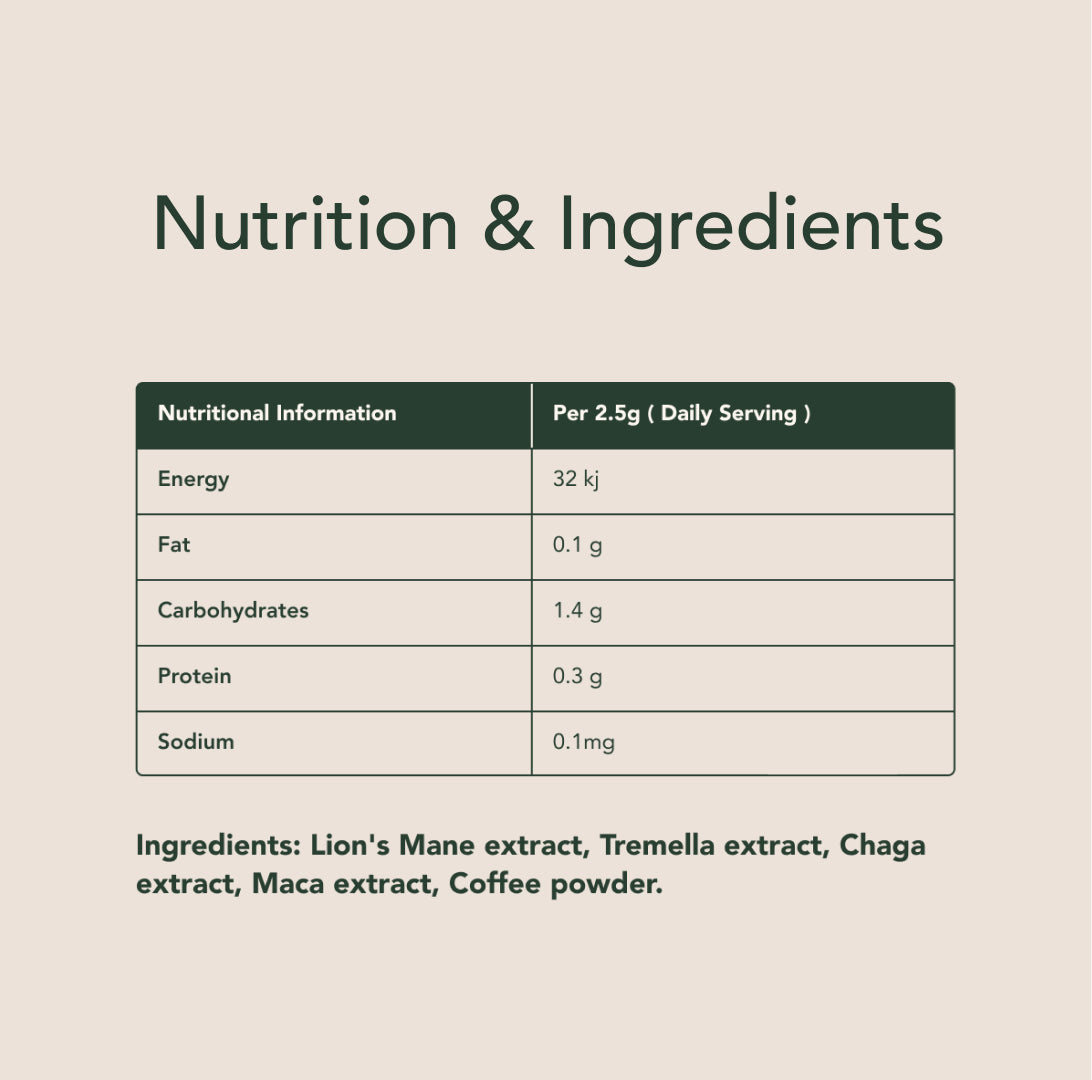
Tremella is a fungus that combines well with other ingredients. With no pronounced taste and a soft texture, the powder dissolves easily in warm drinks. In the Nooni line, Tremella is incorporated into Mushroom Coffee, Mushroom Matcha, and Mushroom Cacao — each time combined with other functional mushrooms for a broader effect.
Important with any Tremella product: the extraction method determines quality. Nooni uses dual extraction — both water and alcohol — so that both the polysaccharides and other bioactive compounds become fully available. Fruiting bodies only, no mycelium on grain. Third-party tested for active compounds.
That's not marketing language. It's the difference between a product that does something and a product that looks like it does something.
Conclusion
Tremella is not hype. It's a well-researched ingredient with a plausible mechanism, consistent laboratory data, and a long history of use. Anyone serious about skin aging looks at what can be done from within. Discover how Nooni incorporates Tremella into daily drinks at getnooni.com.