
Cortisol isn't the enemy. It's a signal — and under chronic stress, that signal stays on too long. Reishi is one of the few adaptogens where research suggests it directly intervenes in your body's stress response. Here's how it works.
What cortisol actually does
Cortisol is your primary stress hormone. Your brain produces it from the adrenal cortex the moment it perceives a threat — a deadline, a conflict, a bad night's sleep. In short bursts, cortisol is functional: it sharpens alertness, mobilizes energy, and focuses your attention.
The problem is the chronic version. When cortisol stays structurally elevated, it disrupts your sleep, weakens your immune system, and inhibits serotonin production. Your body stays in fifth gear, even when the road doesn't warrant it.
Adaptogens — what does that actually mean
Adaptogens are plant or fungal substances that help your body manage stress better — not by removing stress, but by normalizing your physiological response to it. They work bidirectionally: elevated cortisol gets moderated, a suppressed stress response gets supported.
Reishi (Ganoderma lucidum) is one of the most researched adaptogens in the world. It's not a supplement that numbs you. It's a substance that helps your system recalibrate.
The active compounds in reishi
Reishi contains two groups of bioactive compounds relevant to stress regulation:
Triterpenes
Triterpenes — notably ganoderic acids — are bitter, fat-soluble compounds released through alcohol extraction. Research suggests they modulate the HPA axis (hypothalamic-pituitary-adrenal axis). The HPA axis is the central regulatory system behind your cortisol production. Less HPA hyperactivity means a more moderate cortisol spike in response to stressful stimuli.
Beta-glucans
Beta-glucans are polysaccharides available through water extraction. They support immune function via immune modulation — relevant because chronic stress and a weakened immune system are strongly correlated. A more stable immune system contributes to a calmer overall physiological state.
This is exactly why extraction method matters. Cheap reishi products use water extraction alone or are made from mycelium on grain — leaving you with almost no triterpenes. Without triterpenes, you're missing half the picture.
Reishi and GABA: the link to sleep
Chronic stress and poor sleep reinforce each other. Cortisol suppresses melatonin production. Less sleep raises cortisol the next day. A classic vicious cycle.
Reishi breaks that cycle through a second mechanism: activation of GABA receptors. GABA is the primary inhibitory neurotransmitter in your brain — it calms overactive neural activity. Research in animal models suggests that ganoderic acids from reishi improve sleep quality via this GABA pathway, particularly the deep, restorative sleep phase (NREM).
Fewer cortisol spikes in the evening. Deeper sleep. Lower baseline cortisol the next morning. The effects compound.
What you can realistically expect
Reishi doesn't work acutely. You won't feel it within an hour, like caffeine. Adaptogens build effect over weeks of consistent use.
What users typically report after two to four weeks:
- Easier sleep onset, less racing thoughts
- Fewer sharp energy dips in the afternoon
- A sense of being "less switched on" without losing productivity
- Deeper sleep, faster recovery
That last point is subtle but significant. It's not about feeling less — it's about a better ratio between effort and recovery.
Dosage and quality
Studies typically use 1,000 to 3,000 mg of reishi extract per day. But dosage without extract quality is a meaningless number. Effectiveness depends on:
- Extraction method — dual extraction (water and alcohol) for both beta-glucans and triterpenes.
- Fruiting bodies — not mycelium on grain. Fruiting bodies contain significantly higher concentrations of active compounds.
- Third-party tested — so the lab values match what's on the label.
A product that meets all these criteria creates a different physiological conversation than a generic capsule from a health store.
Reishi combined with other mushrooms
Reishi is rarely the only ingredient that matters. In the context of stress and recovery, it works well alongside:
- Lion's Mane — supports NGF and BDNF, the growth factors behind neural plasticity and cognitive resilience under pressure.
- Tremella — indirectly relevant through inflammation reduction and hydration; chronic stress accelerates oxidative damage.
The combination of reishi for cortisol regulation and Lion's Mane for cognitive function addresses two sides of the same problem: reducing stress and protecting brain performance.
Conclusion
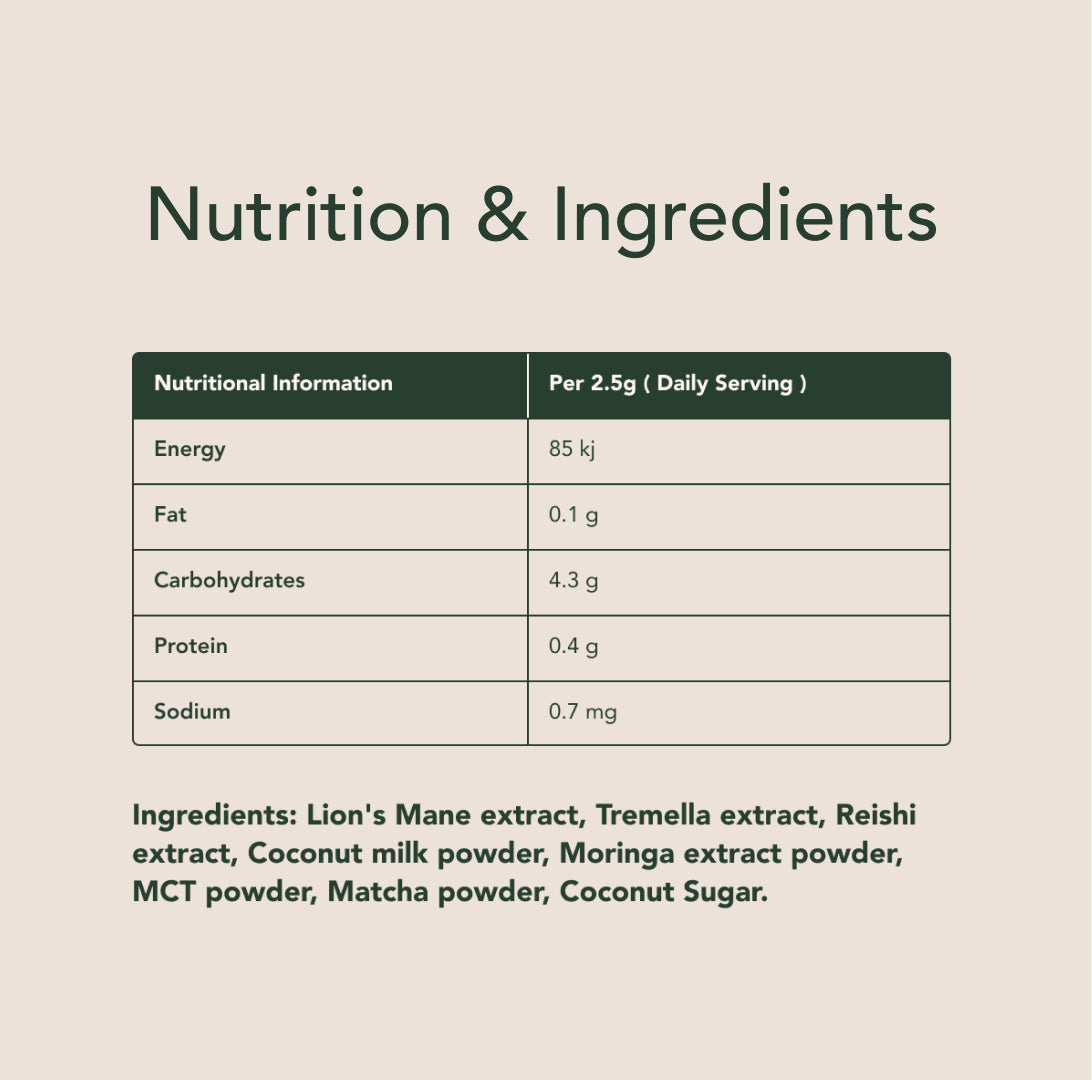
Chronic stress isn't something you meditate away. It has a physiological foundation — and reishi speaks to that foundation directly. Through triterpenes that modulate the HPA axis, through GABA pathways that deepen sleep, through beta-glucans that stabilize the immune system. Consistent use over weeks, with an extract of the right quality, makes the difference. Nooni's Mushroom Cacao combines reishi with Lion's Mane and Tremella — dual extracted, made from 100% fruiting bodies, third-party tested. Discover it at getnooni.com.