
Mushroom coffee is showing up more often next to the espresso machine. But is it a serious alternative, or just coffee with a story attached? This is what the research says — without the hype.
What's actually in it?
Regular coffee is simple: ground or roasted beans, water, caffeine. The effects are known. You wake up, you think sharper — until the effect wears off.
Mushroom coffee combines coffee with dried and extracted medicinal mushrooms. Think Lion's Mane, Chaga or Reishi. These are not psychedelic mushrooms. They are functional fungi that have been used for centuries in traditional Chinese medicine, and for which a growing body of clinical research now exists.
The result is a drink that tastes close to coffee, but has a different profile.
Caffeine: less, but smarter
Regular coffee contains an average of 80–100 mg of caffeine per cup. It works — but it also has a downside. Caffeine blocks adenosine receptors in the brain, making you feel awake. Once that effect wears off, adenosine and fatigue come back double. That's the familiar "crash".
Mushroom coffee typically contains 50–70% less caffeine. Less caffeine means a gentler stimulant, less chance of jitteriness and a more even energy profile throughout the day.
The mushrooms don't compensate by stimulating more. They work through different mechanisms.
What Lion's Mane adds to the comparison
Lion's Mane — scientifically Hericium erinaceus — is the most researched functional mushroom for cognition. The active compounds, hericenones and erinacines, stimulate the production of Nerve Growth Factor (NGF) and Brain-Derived Neurotrophic Factor (BDNF).
NGF supports the growth and maintenance of neurons. BDNF is involved in learning processes, memory storage and neuroplasticity.
Regular coffee doesn't touch these pathways. Caffeine raises alertness through adenosine blockade. Lion's Mane supports the structure and recovery capacity of the brain itself. Those are fundamentally different mechanisms.
Studies, including a double-blind trial from 2009 published in Phytotherapy Research, suggest that Lion's Mane after 8 weeks of use can significantly improve cognitive scores in adults with mild cognitive impairment. Research in healthy adults is promising, but requires further replication.
Chaga: antioxidants that regular coffee doesn't offer
Coffee contains antioxidants — more than most people think. But Chaga (Inonotus obliquus) has the highest ORAC value of virtually any food that's been studied. ORAC stands for Oxygen Radical Absorbance Capacity, a measure of antioxidative strength.
The active compounds in Chaga — including betulinic acid and melanin — may contribute to immune system modulation and anti-inflammatory processes. Regular coffee doesn't offer this profile.
That doesn't mean coffee is bad. It means mushroom coffee has a broader bioactive spectrum.
Sleep: where coffee loses
This is the most underestimated difference.
Caffeine has a half-life of on average 5–7 hours. A cup of coffee at 3 p.m. still has half its caffeine active in your system at 10 p.m. Studies show that caffeine can significantly reduce deep sleep phases (NREM3), even if you feel like you slept well.
Mushroom coffee contains less caffeine, and some varieties contain Reishi. Reishi works through GABA pathways — it mildly depresses the central nervous system and can shorten sleep onset time and improve sleep quality. That's the opposite of what caffeine does.
Taste: being honest
Regular coffee wins on taste if you love a pronounced, complex roasting experience. Specialty coffee has a nuance that's hard to match.
Mushroom coffee has an earthy, full flavor. Depending on the blend — and the quality of the extraction — it can be smooth, nutty, or lightly bitter. It's recognizable as coffee, but quieter.
Anyone used to black espresso will notice an adjustment period. Anyone already using milk or plant-based drinks will barely notice the difference.
Quality determines everything
Not all mushroom coffee is created equal. This is the point where many products stumble.
The active compounds in medicinal mushrooms are locked behind chitin walls. Without extraction — preferably dual extraction using both water and alcohol — beta-glucans and triterpenes don't release. You're essentially drinking mushroom powder with no therapeutic value.
Additionally: mushrooms can absorb heavy metals from the soil. Third-party testing is not a luxury, it's a requirement.
Choose products based on 100% fruiting bodies (no mycelium on grain), demonstrable extraction and independent lab results.
Who chooses what?
Regular coffee is ideal if you're purely after taste and a direct, powerful stimulant. If you're sensitive to caffeine, struggle with sleep, or want to support focus and brain health long-term — then mushroom coffee offers a real alternative.
It's not a replacement for everyone. But it's not a gimmick either.
Conclusion
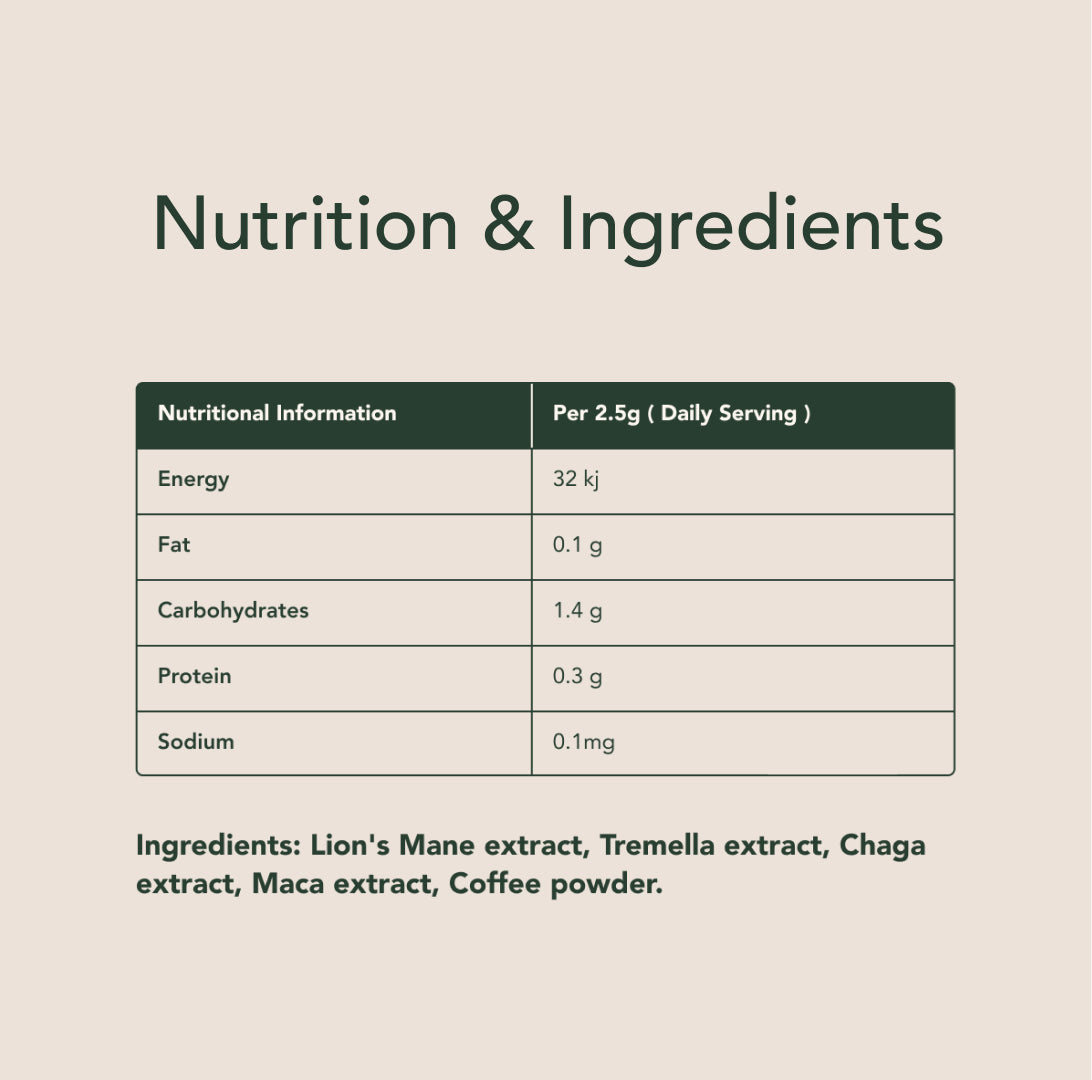
Mushroom coffee and regular coffee play different games. Regular coffee delivers a quick, familiar boost. Mushroom coffee works slower, broader and with less backlash. Whether it fits you depends on what you're looking for. Nooni Mushroom Coffee combines 450 mg Lion's Mane, 300 mg Chaga and 300 mg Tremella — dual extracted, made from 100% fruiting bodies, third-party tested. Discover it at getnooni.com.